Monday, January 10, 2022

30 More Kidnapped Nigerian Students Freed after Seven Months of Captivity
30 More Kidnapped Nigerian Students Freed after Seven Months of Captivity.lelemuku.com.jpg

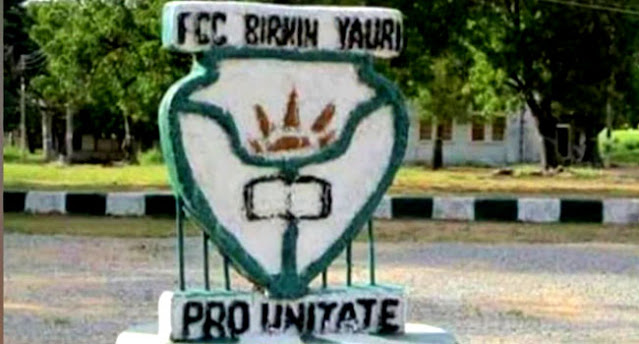
ABUJA, LELEMUKU.COM - Gunmen in northwest Nigeria's Kebbi state have freed 30 students and a teacher after seven months of captivity, according to a local official.

More than 1,400 children were abducted in Nigeria last year according to the United Nations, mostly during attacks on schools and colleges by gunmen known locally as "bandits."

Students are often quickly released after ransom payments but 200 were still missing in September, the U.N. added.

Thirty students of Federal Government College and one teacher have arrived in Birnin Kebbi "following their release," Yahaya Sarki, a spokesman for the Kebbi state governor, said late Saturday.

"They shall undergo medical screening and support while being reunited with their families," he added in a statement.

It was unclear if ransom was paid for the release of the students or if any others were still in captivity.

Last June, gunmen stormed the college in the town of Yauri, seizing 102 students and eight staff according to the school.

The attack was confirmed by police but they would not say how many students or teachers were taken.

Security personnel rescued eight of the kidnapped students and a teacher while bodies of three students were found in the bush.

The kidnappers freed 27 students and three staff in October, while an unspecified number were released after their parents negotiated with the captors.

Clashes between herders and farmers over access to land has plagued northwest and central Nigeria for years, with some groups evolving into criminal gangs who now terrorize local communities.

Since last year, gangs have intensified highway kidnappings and mass abductions of students.

On Wednesday, the Nigerian government issued an official gazette declaring activities of bandits as "acts of terrorism."

President Muhammadu Buhari, a former army general, is also battling a more than decade long jihadist insurgency in the northeast and separatist tensions in the country's southeast. (VOA)

Labels:

West African Leaders to Discuss Mali Crisis in ECOWAS Summit

West African Leaders to Discuss Mali Crisis in ECOWAS Summit .lelemuku.com.jpg

ACCRA, LELEMUKU.COM - West African leaders will gather Sunday to discuss Mali's political crisis, with the military junta submitting a new timeframe for a transition back to civilian rule at the last minute after its first proposal was rejected.

The extraordinary summit of the Economic Community of West African States (ECOWAS) bloc in Ghana's capital Accra is expected to discuss possible sanctions on the Sahel state over potentially delayed elections, among other issues.

The meeting comes after months of increasing tensions over the timetable for restoring civilian rule in Mali after a military takeover in 2020.

In August that year, army officers led by Colonel Assimi Goita toppled the elected president Ibrahim Boubacar Keita amid street protests against his unpopular rule.

Under threat of sanctions, Goita subsequently promised to restore civilian rule in February 2022 after holding presidential and legislative elections.

But he staged a de facto second coup in May 2021, forcing out an interim civilian government.

The move disrupted the reform timetable, and was met with widespread diplomatic condemnation.

ECOWAS insisted that Mali hold elections in February.

But the government then said it would only set an election date after holding a nationwide conference— arguing that a peaceful vote was more important than speed.

Swathes of Mali lie outside of state control, with the government struggling to quell a jihadist insurgency that has raged since 2012.

On December 30, after Mali's reform conference ended, the government suggested a transition period of between six months and five years, starting from January 1, 2022.

This would enable the authorities to "carry out structural institutional reforms and (organize) credible, fair and transparent elections", it said.

But ECOWAS mediator Goodluck Jonathan asked the regime to revise that plan during a visit last week, Mali's foreign minister said.

On Saturday, the junta submitted a new proposed timetable to the bloc's acting president, Malian state television reported— without giving any details about its contents.

Potential sanctions

The 15-nation ECOWAS has led the push for Mali to uphold its commitment to stage elections early this year.

The return to civilian rule has put the bloc's credibility on the line as it seeks to uphold fundamental principles of governance and contain regional instability.

At a summit on December 12, its leaders reiterated demands that the elections be held by February 27 as initially planned.

They maintained sanctions such as asset freezes and travel bans within the ECOWAS region against around 150 junta figures and their families, and threatened further "economic and financial" measures.

The possibility of fresh sanctions is expected to be on the agenda at Sunday's summit.

A West African Economic and Monetary Union summit will immediately precede the ECOWAS talks in Accra, with its eight members potentially meeting to lead concerted action and impose new economic sanctions.

Sanctions have proved effective in the past.

For example, the bloc responded to Goita's first coup, in 2020, by shuttering Mali's borders, imposing trade restrictions and suspending the country from its decision-making bodies.

Mali's army installed a civilian-led government in response and pledged to hold elections, which led to a lifting of the economic sanctions, although Mali remains suspended from the bloc's main bodies.

ECOWAS did not impose sanctions immediately after the second putsch, but in November it opted for targeted measures against individual junta members over perceived delays in its election preparations.

Analysts say regional leaders must take into account the risks of pitting Malians against ECOWAS.

A large proportion of the country's political class boycotted the recent reform consultation, but the government's narrative promoting national sovereignty resonates with some of the population. (VOA)

Labels:

Thursday, January 6, 2022

Map Helps Chinese Man, Li Jingwei Reunite with His Family After Decades

Map Helps Chinese Man, Li Jingwei Reunite with His Famvily After Decades.lelemuku.com.jpg

WASHINGTON, LELEMUKU.COM - Since he was a child, Li Jingwei did not know his real name. He did not know where he was born, or for certain how old he was — until he found his biological family last month with the help of a long-remembered map.

Li was a victim of child trafficking. In 1989, when he was 4 years old, a neighbor lured him away by saying they would go look at cars, which were rare in rural villages.

That was the last time he saw his home, Li said. The neighbor took him behind a hill to a road where three bicycles and four other kidnappers were waiting. He cried, but they put him on a bike and rode away.

"I wanted to go home but they didn't allow that," Li said in an interview with The Associated Press. "Two hours later, I knew I wouldn't be going back home, and I must have met bad people."

He remembers being taken on a train. Eventually he was sold to a family in another province, Henan.

"Because I was too young, only 4, and I hadn't gone to school yet, I couldn't remember anything, including the names" of his parents and hometown, he said.

Etched in his memory, however, was the landscape of his village in the southwestern city of Zhaotong, Yunnan province. He remembered the mountains, bamboo forest, a pond next his home — all the places he used to play.

After his abduction, Li said he drew maps of his village every day until he was 13 so he wouldn't forget. Before he reached school age, he would draw them on the ground, and after entering school he drew them in notebooks. It became an obsession, he said.

More than 30 years after his abduction, a meticulous drawing of his village landscape helped police locate it and track down his biological mother and siblings.

He was inspired to look for his biological family after two reunions made headlines last year. In July, a Chinese father, Guo Gangtang, was united with his son after searching for 24 years, and in December, Sun Haiyang was reunited with his kidnapped son after 14 years.

Reports of child abductions occur regularly in China, though how often they happen is unclear. The problem is aggravated by restrictions that until 2015 allowed most urban couples only one child.

Li decided to speak with his adoptive parents for clues and consulted DNA databases, but nothing turned up. Then he found volunteers who suggested he post a video of himself on Douyin, a social media platform, along with the map he drew from memory.

It took him only 10 minutes to redraw what he had drawn hundreds, perhaps thousands of times as a child, he said.

That post received tens of thousands of views. By then, Li said police had narrowed down locations based on his DNA sample, and his hand-drawn map helped villagers identify a family.

Li finally connected with his mother over the telephone. She asked about a scar on his chin which she said was caused by a fall from a ladder.

"When she mentioned the scar, I knew it was her," Li said.

Other details and recollections fell into place, and a DNA test confirmed his heritage. In an emotional reunion on New Year's Day, he saw his mother for the first time since he was 4.

As Li walked toward her, he collapsed on the ground in emotion. Lifted up by his younger brother and sister, he finally hugged his mother.

Li choked up when speaking about his father, who had died. Now the father of two teenage children, Li said he will take his family to visit his father's grave with all his aunts and uncles during Lunar New Year celebrations next month.

"It's going to be a real big reunion," he said. "I want to tell him that his son is back." (VOA)

Labels:

Tuesday, January 4, 2022

Brazil President Jair Bolsonaro Taken to Hospital after feeling Abdominal Discomfort


BRAZILIA, LELEMUKU.COM -  Brazil President Jair Bolsonaro could need surgery after being rushed to Sao Paulo hospital

An intestinal blockage likely caused due to complications following a 2018 stabbing could leave Brazilian president Jair Bolsonaro in need of surgery after he was rushed to Vila Nova Star hospital in Sao Paulo on Monday morning.

Bolsonaro was stabbed in his abdomen during a campaign rally in Juiz de Fora in September 2018. (RT)

Labels: