Monday, August 29, 2022

Rohingya Refugees Claims to Face an Uncertain Future in Indonesia

Rohingya Refugees Claims to Face an Uncertain Future in Indonesia

JAKARTA, LELEMUKU.COM - Rohingya refugees living in Indonesia say they are growing more and more desperate as they struggle to get by in the face of an uncertain future, with the prospect of relocation to a third country increasingly remote.

Muhammad Hanif, a Rohingya from Maungdaw township in Myanmar’s Rakhine state, tried to reach Australia from Malaysia by boat in 2013, but got stranded in Indonesia where refugees are not allowed to work or attend formal schools. Hanif said he sometimes thought about committing suicide, but support from his parents and religious teachers kept him alive.

“They keep telling me it’s a test from God. But this is so heavy that sometimes it’s unbearable,” Hanif, a 46-year-old father of three, told BenarNews at a mosque near his home just southwest of Jakarta.

As Rohingya worldwide this week marked the fifth anniversary of a brutal Burmese military offensive that drove 740,000 of their people from Rakhine state across the border into Bangladesh, the prospect of being repatriated to their homeland any time soon has dimmed since the junta seized power in a coup last year. At the same time, stateless Rohingya like Hanif in Indonesia face slim chances of being resettled in third countries.

Hanif said his family fled from Myanmar to Malaysia in 1982, long before the crackdown, after his father was attacked by what he described as thugs who demanded that he surrender the family’s land.

“My father did not give in and fought back,” he said. “My father was tortured, and his land was confiscated by Buddhist thugs.”

His family receives 4 million rupiah (U.S. $270) per month from the International Organization for Migration (IOM), a United Nations agency.

“The money is not enough,” Hanif said.

“Before COVID-19, Indonesian neighbors were very kind. When they knew we didn’t have enough, they gave us food. After COVID-19, they have been struggling themselves.”

Hanif said he wanted to move to the United States for a better life and to be reunited with relatives who live there.

Since the 2017 crackdown in Myanmar, Rohingya have paid traffickers to transport them to Thailand and Malaysia where they hope to find work away from Myanmar or the crowded refugee camps in Bangladesh.

More than 600 Rohingya have ended up stranded in Indonesia on their way to third countries, according to the U.N. refugee agency UNHCR, adding that third countries are taking in few refugees, whether they are Rohingya or refugees from other countries.

Indonesia is not a party to the U.N.’s 1951 Refugee Convention or its 1967 Protocol Relating to the Status of Refugees, so it is not required to follow protocols related to jobs and education.

In a statement in December 2021, UNHCR acknowledged frustrations expressed by the Rohingya and explained the resettlement process as well as its limitations, “stressing that resettlement can only be offered to a very limited number of vulnerable refugees, given the low number of places available worldwide.”

Over the last five years, about 2,700 refugees – including 46 percent who are from Afghanistan – have departed Indonesia, the statement said.

Mitra Suryono, the UNHCR spokeswoman in Indonesia, said 20 countries most likely to receive refugees could accept less than 1.5 percent of the 26 million refugees of all backgrounds worldwide. The refugee agency did not comment on Hanif’s resettlement status.

Forced to borrow

Abu Sayyid, 34, another Rohingya who lives near Hanif, said the IOM aid money often did not last a month, so he was forced to borrow from neighbors.

“They don’t always lend us money. As an adult I can stand it, but the children can’t,” said Sayyid, who also has three children.

Sayyid said he hoped President Joko “Jokowi” Widodo would raise the issue of Rohingya at the G20 summit in Bali in November.

“Among Asian countries – Bangladesh, Thailand, India, Malaysia, Indonesia – Indonesia is the most supportive,” he said.

Atika Yuanita, head of the Indonesian Civil Society Association for Refugee Rights Protection (SUAKA), said the Rohingya were in dire need of financial support, housing and access to education.

“Our goal is at least for the government to establish legislation in Indonesia to fulfil the rights of asylum seekers and refugees,” she told BenarNews.

Siti Ruhaini Dzuhayatin, a member of the Presidential Staff Office, did not immediately respond to a BenarNews request for comment.

On Thursday, Marzuki Darusman, who heads the U.N.’s international fact-finding team on Myanmar, said justice remained elusive for Rohingya five years after the violent crackdown.

“Things like what happened to the Rohingya also happened to other ethnic groups in Myanmar, strengthening findings that … the Tatmadaw is the source of violence in Myanmar,” Marzuki told an online discussion, referring to the Burmese military.

Marzuki also proposed that Aug. 25 be designated as Rohingya Day to commemorate the violence “so that the Rohingya will feel that their identity is recognized.”

Meanwhile, Yuyun Wahyuningrum, an Indonesian representative to the ASEAN Intergovernmental Commission on Human Rights, urged the Southeast Asian bloc to come up with “durable solutions” to the Rohingya refugee crisis.

“They remain stateless and live in limbo, lack refugee status, are dependent on humanitarian aid, are unable to fully exercise their rights, often live in fear and with the threat of arrest, detention, deportation, and lack access to health, education, livelihoods, formal jobs or longer-term durable solutions,” she said in a statement on Friday.

“Those attempting sea journeys are at the mercy of traffickers and at risk of bonded labor. However, the region still has no specific mechanism in place to ensure equitable and predictable disembarkation of refugees and migrants in distress at sea,” she said. ( Pizaro Gozali Idrus / Dandy Koswaraputra | BenarNews)

Labels:

Bangladesh Halts Construction of Elevated Bus Line Following Deadly Collapse

Bangladesh Halts Construction of Elevated Bus Line Following Deadly Collapse.lelemuku.com.jpg

DHAKA, LELEMUKU.COM - Bangladesh’s government announced Friday that it had ordered a halt to the construction of an elevated bus line until the Chinese contractor could ensure safety on the project plagued by recent deadly incidents, including a section collapse that killed five people this month.

On Aug. 15, a girder being installed for the rapid bus transit line project fell and flattened a car that was driving underneath the elevated line along Jashim Uddin Avenue in Uttara, a suburb of Dhaka, killing five members of a family.

A newlywed couple also suffered serious injuries in the mishap that took place along the Dhaka-Mymensingh national highway, one of the country’s busiest roads.

“The contractor had some lapses that led to the girder collapse. This is unacceptable. Unless they ensure complete safety and security of the people, the construction will remain suspended,” Shafiqul Islam, the managing director of the Dhaka Bus Rapid Transit Co. Ltd, told BenarNews.

Islam and other officials went to the accident site on Friday to assess progress. The government has formed a three-member team to investigate the collapse.

Neelima Akhter, an additional secretary in the Road Transport and Bridges Ministry who leads the team, said she expected to complete the probe by next week.

“The construction is currently halted after the tragedy. Unless the contractor ensures full safety and security of the people, we will not allow them to carry on the construction work,” she told BenarNews.

“If proven guilty in our probe, we will suggest actions against the contractor and other concerned people,” she said without elaborating.

China’s Gezhouba Group was awarded the contract in 2016 to construct the 20.2-km (12.5-mile) rapid transit line, which will connect the Gazipur area of Dhaka with Hazrat Shahjalal International Airport. The cost of the project is 42.6 billion taka (U.S. $450 million).

A relative of the victims filed a case with the police against the Chinese company.

Authorities have arrested at least 10 people involved in the project, Md. Mohsin, officer-in-charge of Uttara West Police Station, told BenarNews on Friday.

Mohammed Belayet Hossain, a former secretary of the ministry’s road transport and highways division, blamed the collapse on the Chinese contractor.

“The China Gezhouba Group Co. Limited is not a good company. They do not invest enough money to implement such a big project like the BRT,” Belayet Hossain alleged, using an acronym for the bus rapid transit system.

“As secretary, I personally visited sites and investigated the works of the China Gezhouba. Their safety measures were almost absent,” he told BenarNews. “The company does not want to spend [money] on ensuring public safety and security around the project premises.”

He said the construction site was also not blocked off properly.

“They worked keeping the vehicular traffic as usual – this is unacceptable,” he said, adding, “They could have placed the girders at midnight when traffic slows down remarkably.”

Belayet Hossain also alleged that the Chinese company had received the contract because of its low bid, adding it did not provide proper safety gear including boots, helmets and vests, for its workers.

“According to Bangladesh procurement rules, the company offering the lowest price must be given the contract,” Belayet Hossain said. “But I think we need a change in the rules – we should assess the capacity of a company before awarding a mega project.”

Past mishaps


The Chinese embassy in Dhaka did not immediately respond to a BenarNews email request for comments on the stoppage and the allegations against the Gezhouba Group.

The crane being used did not have the capacity to handle the weight of the girder and its operators, who were among those arrested, were not licensed to operate it, Khandaker Al Moin, a spokesman for the police’s Rapid Action Battalion, told a news conference on Aug. 18.

Moin said a Gezhouba Group official had ordered employees to work during a public holiday despite a manpower shortage including workers responsible for safety and traffic management. Some of those working were new and inexperienced.

This month’s deadly incident was not the first at the project site.

In July, a crane collapsed on a Bangladeshi worker and killed him along a stretch of the bus transit line at the Gazipur end. And in March 2021, six workers, including three Chinese citizens, were injured in an accident involving the setting of a girder broke along another stretch of the route. (Kamran Reza Chowdhury | BenarNews)

Labels:

Saturday, August 27, 2022

China-funded TransportationProject in Southern Philippine Becomes Burden for Residents

China-funded TransportationProject in Southern Philippine Becomes Burden for Residents.lelemuku.com.jpg

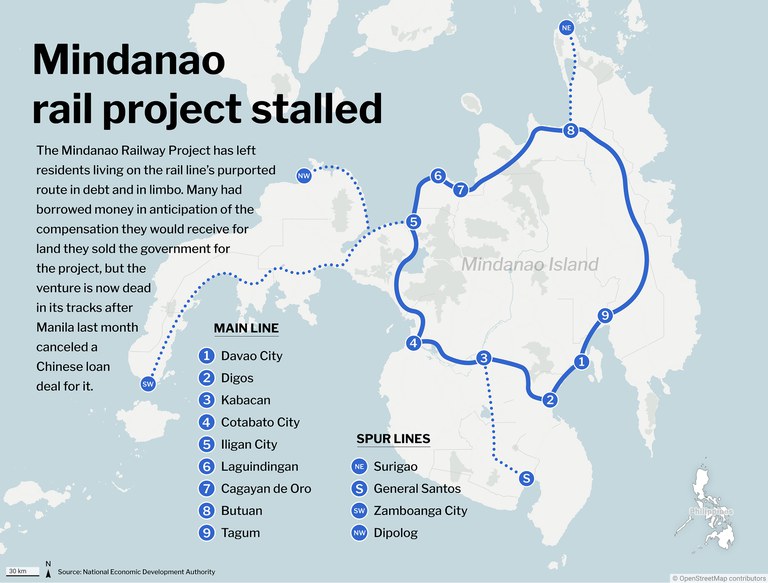
MANILA, LELEMUKU.COM - Far from becoming the once-touted star of the Philippines’ infrastructure program, a huge rail project that China was supposed to back in the south has become a millstone around residents’ necks, leaving many in debt and in limbo during the past four years.

The U.S. $1.5 billion first phase of the Mindanao Railway Project is now dead in its tracks after Manila announced last month that it had canceled a Chinese loan deal for it, citing Beijing’s longtime inaction on Philippine funding requests. The finance department also said that Beijing was asking for interest rates higher than 3 percent – terms that were unfavorable to Manila.

But in 2018, two years after the government unveiled the project to great fanfare, it set about acquiring land to build the first phase’s 105-kilometer line between the provinces of Davao del Norte and Davao del Sur that, when completed, would cut travel time to just over an hour from 3.5 hours.

Ricky Tabay, a 52-year-old resident of Davao City, was told he had to give up a 7000-square-foot piece of land that he and his siblings had inherited from their father so the Mudiang Station, a stop on the Tagum-Davao-Digos segment of the railway, could be constructed.

“These people from the government were here and told us to secure the [document] requirements because if we did not sell our lands, they would be forcibly taken away by the government,” Tabay, who works as a meat vendor, told BenarNews recently during an interview at his ancestral house.

Left with no option, Tabay and his eight siblings together borrowed at least $1,000 to process the land’s documents, as the government required. Last month, when he went to submit the documents to the transportation office in Davao City, he was told the project had been cancelled.

“Now we don’t know what’s next. How can we pay for the money we borrowed?” Tabay said, adding that his siblings had to take up menial jobs to contribute to the expenses for processing the documents.

BenarNews asked the Chinese Embassy in Manila why Beijing had not approved the Philippines’ loan application.

“[T]here is no such thing that China did not approve the loan application for the Mindanao Railway project,” the embassy said in an email.

“Teams from both sides will work closely to move this project forward.”  

‘Waiting for nothing’


Like the Tabays, other residents have been left angry and confused, after what they were told was the cancelation of the much-touted Chinese loan for the Mindanao railway project. It was one of the country’s big-ticket infrastructure projects promoted under former President Rodrigo Duterte, who had served as mayor of Davao city for decades.

The government has yet to appraise the Tabays’ property, Ricky Tabay said.

“We hope the railway won’t push through anymore. Even if we get the money from the government, we’re worried that it won’t be enough to pay for a new lot or build a new house,” said Chiela Castañares, 36, Tabay’s sister.

“We were kept waiting and waiting for nothing. Just leave us alone with our land.”

The Department of Transportation blamed its consultant, Ove, Arup & Partners, and its sub-consultant and appraiser, Intech Property Appraisal Services, for the delays.

“The problems are mostly because of the appraisal consultant. The Department has no contribution to that,” Clipton Solamo, project manager of the Mindanao Railway Project, told BenarNews in a phone interview Wednesday.

He said Intech had been late with its submission even before the COVID-19 pandemic lockdowns. The firm also submitted erroneous assessments and appraisals, he added, setting the process back further.

“There was no justifiable reason that we could find. Every time they failed to submit appraisal reports, we would issue notices of citation, but until now they have not submitted everything,” Solamo said.

In San Miguel and Mankilam villages in Davao del Norte, many residents have bet on receiving money for their land from the government but are now in serious debt, said Mankilam community leader Hernani Catahum.

“A lot of people here borrowed money three to four years ago when DOTr said they will pay residents. Now, many are anxious because China backed out,” he told BenarNews, referring to the Department of Transportation.

“I just tell them to wait and not panic.”

Catahum, 51, said residents had grown tired of empty promises and plans.

“People here already went through different stages: from sadness of losing their houses, to a certain level of acceptance, to again frustration, and now anger,” Catahum said.

Take the case of Nenita Maldo, 65, from Tagum City in Davao del Norte, who has had to live with a leaky roof in the small neighborhood store she runs for two years now. She said residents were told not to make any modifications to their properties.

Maldo has no choice now but to place a pail below the four holes in her roof to catch the dripping water. If she’s unlucky, the pails overflow and she wakes up to a flooded living room.

“We feel our lives are pending. I have no money so I cannot transfer to a new place yet,” Maldo, who runs a small neighborhood store, said.

The Tagum City Planning Office, meanwhile, has been at the receiving end of the residents’ anger.

“I just tell everyone in our team to be patient because we are the frontliners here and we deal with frustrated and desperate residents. The problem is with the DOTr and their consultants,” said Leymeynard Opeña, an information systems analyst in the planning office.

Solamo, the manager of the Mindanao Railway Project, said the DOTr would conduct public consultations to address communities’ fears, but he didn’t say when.

Congressional probe


As the project’s future remains uncertain, it has become the target of a possible congressional investigation.

Lawmakers, including Paolo Duterte, the former president’s son who represents the first district of Davao city in Congress, filed a resolution calling for a probe but no schedule has been set.

Duterte noted that one of the city’s communities, Catalunan Grande, had also issued a resolution opposing the project for its “undue safety and health hazards.”

The transportation department, for its part, said it was ready to face an oversight investigation.  (Camille Elemia / Jeoffrey Maitem | BenarNews)

Labels:

UMNO Move to Back Former Malaysia PM Jailed Najib Razak May Make Party Stronger

UMNO Move to Back Former Malaysia PM Jailed Najib Razak May Make Party Stronger.lelemuku.com.jpg

KUALA LUMPUR, LELEMUKU.COM - The president of Malaysia’s ruling party said Wednesday it would continue to back incarcerated senior leader and former Prime Minister Najib Razak, a move that may make it stronger ahead of the next general election, according to analysts.

In the United Malays National Organization’s first statement since the country’s highest court sent Najib to prison for 12 years on Tuesday, party President Ahmad Zahid Hamidi alleged that the former PM was not given a fair chance to defend himself against corruption charges with supposed new evidence.

UMNO “will forever remain with [Najib] in his other trials,” Zahid said, referring to other ongoing cases that Najib is facing in connection with the 1MDB financial scandal.

The party can exploit the line that Najib didn’t get a fair hearing in his appeal before the highest Federal Court, suggested Azmi Hassan, a senior fellow with the Nusantara Academy for Strategic Research, a think-tank in Selangor.

UMNO “can now use the narrative that Najib was not given the fairest process to defend himself. I believe it will make UMNO even stronger, contrary to popular belief that UMNO will become weak without Najib,” Azmi told BenarNews.

“This is the narrative they are trying to sell, trying to use … in order to gain sympathy from voters,” he said, adding that he believes it could be a very effective strategy.

Furthermore, Najib has tens of thousands of supporters and UMNO backing him would help retain grassroots support for the party in the next election, indicated analyst Oh Ei Sun.

Supporting Najib “would buttress support for UMNO from among Najib’s ardent supporters who are apparently quite considerable in their numbers as well,” Oh told Channel News Asia.

However, he did add that UMNO distancing itself from Najib might have won over some fence-sitters and brought about “a refreshed image for UMNO,” whose president Zahid, too, is standing trial on 47 corruption charges.

On Tuesday, the Federal Court upheld Najib’s conviction and 12-year prison sentence for the alleged misappropriation of 42 million ringgit (U.S. $9.67 million) from SRC International, a former subsidiary of 1MDB, making him the first former or current Malaysian prime minister to serve a jail term.

Najib ‘brought shame’ to Malaysia


Meanwhile, two groups on Wednesday lodged contrasting petitions with the palace over the possibility of Najib applying for a royal pardon so he wouldn’t have to serve his decade-plus sentence or pay the ordered 210 million ringgit ($49.3 million) fine.

A group of around 300 Najib supporters gathered outside the palace to submit a petition to palace officials, which requested the king to pardon Najib.

“I would like to request for a full pardon to be given immediately to this person who has served honorably,” Syed Mohammad Imran Syed Abdul Aziz, the president of the group Pertubuhan Jalinan Perpaduan Negara Malaysia, which organized the gathering, told the media, the Reuters news agency reported.

“His service and contributions have been torn apart in a humiliating way,” added Syed, who is an UMNO member.

He also said the application for a royal pardon must come from Prime Minister Ismail Sabri Yaakob, a senior UMNO member. If the PM does not submit such an application, Syed urged Zahid to withdraw support to UMNO’s own government, which would lead to snap polls.

An UMNO faction supported by Zahid has been pushing for snap polls, while the PM, who holds the number 3 position in the party has been resisting such calls. These positions may have changed since Tuesday’s verdict, analysts said.

Elsewhere, the electoral watchdog group Bersih started a competing petition urging that Najib not be pardoned. The petition, addressed to the palace, requests King Abdullah Ri’ayatuddin Al-Mustafa Billah Shah to reject any opportunity to pardon Najib.

As of Wednesday evening, more than 35,000 people had signed the petition.

“We, your loyal subjects, humbly appeal to Your Majesty, not to exercise your discretion to pardon former Prime Minister Najib Abdul Razak for his crime against the Malaysian public,” the petition said.

“He has been convicted of stealing public funds in the SRC International case and had been given due process of a fair trial. As the rakyat [public], we had to suffer the impact of corruption by elected officials who enriched themselves with our national wealth instead of using it to develop this country.”

Bersih, a grassroots activist organization that advocates clean government, was the group that spearheaded massive street protests after the 1MDB scandal was publicly exposed in 2015, when Najib was still in power.   

The former prime minister is scheduled to be back in the dock, at the Kuala Lumpur High Court, on Thursday for his trial in a 1MDB case in which he faces 25 charges of abuse of power and money laundering connected with 2.3 billion ringgit ($551 million) that went missing from the sovereign fund.

Najib set up 1MDB in 2009 when he served as prime minister and finance minister, saying it would benefit Malaysians.

More than $4.5 billion was diverted from 1MDB through fraudulent shell companies to corrupt officials and their associates, according to the U.S. Justice Department.

The 1MDB scandal caused UMNO to be swept out of power in the 2018 general election, a first for the grand old party that had not lost national polls in Malaysia’s then 60-year history. (Tengku Noor Shamsiah Tengku Abdullah / Noah Lee / Nisha David | BenarNews)

Labels:

Monday, August 22, 2022

Indonesia’s Attempt to Address Past Human Rights Abuses Risks Perpetuating Impunity

Indonesia’s Attempt to Address Past Human Rights Abuses Risks Perpetuating Impunity.lelemuku.com.jpg

JAKARTA, LELEMUKU.COM - Indonesian President Joko “Jokowi” Widodo has set up a team to establish the truth about gross human rights abuses from Indonesia’s past, but activists warn it could perpetuate impunity because the body has no power to bring perpetrators to justice.  

Jokowi announced this week that he had signed a decree to establish the team and that a bill on a truth and reconciliation commission was being deliberated at the national legislature.  

“I have signed a presidential decree on the formation of the Team for Non-Judicial Settlement of Past Gross Human Rights Violations,” the president said during his State of the Nation speech to parliament on Tuesday, the eve of Indonesia’s 77th anniversary of independence.

Jokowi said his administration was serious about resolving rights abuse cases.

Parliament is deliberating a bill on a South Africa-style truth and reconciliation commission for Indonesia, he said.

Southeast Asia’s largest and most populous nation has a long and well documented history of alleged human rights abuses, particularly those which occurred under past military-dominated regimes and in 1965-66, when hundreds of thousands of people were believed to be killed during a counter-communist purge.

The mass killings from that time remain a sensitive topic in Indonesia, with successive governments showing a reluctance to bring about a public reckoning with that dark episode from decades ago, as human rights advocates have called for.  

BenarNews saw a copy of the presidential decree instituting the creation of the new body.

The decree does not specify a time frame but it said it was based on recommendations made in 2020 by the National Human Rights Commission (Komnas HAM), a state agency, that urged the government to look at cases dating back to as early as the mid-1960s.

Observers are casting doubt that the non-judicial body, which has no punitive powers, can confront past human rights abuses effectively and seriously.

“The team seems to be designed to settle cases of human rights violations by providing compensation for victims only,” ​​said Wahyudi Djafar, executive director for the Institute for Public Studies and Advocacy (Elsam).

“This could be a recipe for more human rights violations,” he told BenarNews.

Victims of rights violations deserve justice and accountability through a human rights court, he said.

The National Commission on Human Rights said cases that qualify as gross human rights violations include the anti-communist purge following a failed coup blamed on the Indonesian Communist Party (PKI) in 1965, the forced disappearance of activists in the dying days of the Suharto regime in 1998 and the killings by security forces of four high school student protesters in 2014.

The country’s long-time dictator, Suharto, came to power in 1967 when he took over from Sukarno, the country’s founding president, after mass killings targeting suspected communists. Suharto resigned in 1998 amid political and economic upheaval.

Hendardi, the director of the Setara Institute for Democracy and Peace, accused the government of trying to whitewash past abuses instead of bringing perpetrators to justice.

“Instead of collecting facts and information to accelerate a judicial mechanism mandated by the law on the human rights court, Jokowi has actually shut down the victims’ hopes for truth and justice,” he said in a statement.

The Civil Society Coalition, an alliance of rights abuse victims and activists, urged Jokowi to repeal the decree, warning that it would only “strengthen impunity” because there would be no accountability for perpetrators.

The coalition called on Jokowi to order “transparent and accountable investigations of gross human rights violations,” and for parliament to recommend the establishment of an ad-hoc human rights court to try the cases.

Mohammad Mahfud MD, the coordinating minister for political, legal and security affairs, said the team would be led by credible figures including veteran Indonesian diplomat Makarim Wibisono and Marzuki Darusman, who chaired a United Nations fact‑finding mission on Myanmar.

“The judicial route will continue. In accordance with legislation, the settlement of past human rights violations must be taken in two parallel ways, through judicial and non-judicial processes,” Mahfud MD said.

A member of Komnas HAM, Beka Ulung Hapsara, said the non-judicial process was intended to establish the truth, reconciliation and compensation for victims.

“I think the activists’ doubts are justified. It is up to the government to prove it with concrete steps, including maximizing the available judicial mechanisms,” he said.

Makarim, a former Indonesian ambassador to the U.N. who will chair the team, said he had not received the decree yet and declined to comment.

Papua: A hotbed of abuses

Meanwhile, Human Rights Watch this week urged Indonesian authorities to drop what it called politically motivated treason charges against activists in Papua, Indonesia’s troubled far-eastern region where violence linked to the separatist insurgency has been on the rise.

The group accused Indonesian authorities of intimidation, arbitrary arrests, torture, extra-judicial killings and mass forced displacement in Papua.

“Indonesian security forces for decades have routinely subjected Indigenous Papuans to wrongful arrests and violence, and yet were never brought to justice for these rights violations,” said Phil Robertson, deputy Asia director at Human Rights Watch.

“The Indonesian government should stop harassing and arresting peaceful Papuan protesters, and immediately release activists prosecuted for peacefully exercising their rights to freedom of expression and assembly,” it said.

Theofransus Litaay, a member of the presidential office staff, said the welfare of Papuans would “always be our top priority.”

“The government of Indonesia has made clear on numerous occasions that the use of excessive force, extra-judicial killings, enforced disappearance and torture have no place in our society,” he told BenarNews.

The government has made efforts to address alleged rights abuse cases “according to applicable laws, emphasizing victims’ justice and ending impunity,” he said.

“Many innocent civilians, including health workers and construction workers, have fallen victims to threats and violence by the armed criminal groups,” he said, referring to separatist fighters.

“This security situation warrants the deployment of security forces to secure and defend the people.”

Last month, a report from the U.S. Holocaust Memorial Museum, based in Washington, warned that mass killings of civilians could occur in the Papua region in the next year to 18 months if current conditions deteriorate to a worst-case scenario.

A combination of factors – increasing rebel attacks, better coordination and organization of pro-independence civilian groups and ease of communication – makes it plausible that the unrest could reach a new level in the next 12 to 18 months, the report said.

The risks are rooted in factors such as past mass atrocities in Indonesia, the exclusion of indigenous Papuans from political decision-making, Jakarta’s failure to address their grievances and conflicts over the exploitation of the region’s resources, according to the report.

Other factors include Papuans’ resentment over Jakarta’s failure to hold accountable security personnel implicated in human rights abuses, it said.

Papua, on the western side of New Guinea Island, was incorporated into Indonesia in a United Nations-administered ballot in the late 1960s.

In 1963, Indonesian forces invaded Papua – like Indonesia, a former Dutch colony – and annexed the region.

Only about 1,000 people voted in the U.N.-sponsored referendum in 1969 that locals and activists said was a sham, but the United Nations accepted the result, essentially endorsing Jakarta’s rule. (Nazarudin Latif / Dandy Koswaraputra | BenarNews)

Labels:

Friday, August 19, 2022

ACC Supported The ASEAN Guest of Honour Project of the 12th Beijing International Film Festival

ACC Supported The ASEAN Guest of Honour Project of the 12th Beijing International Film Festival

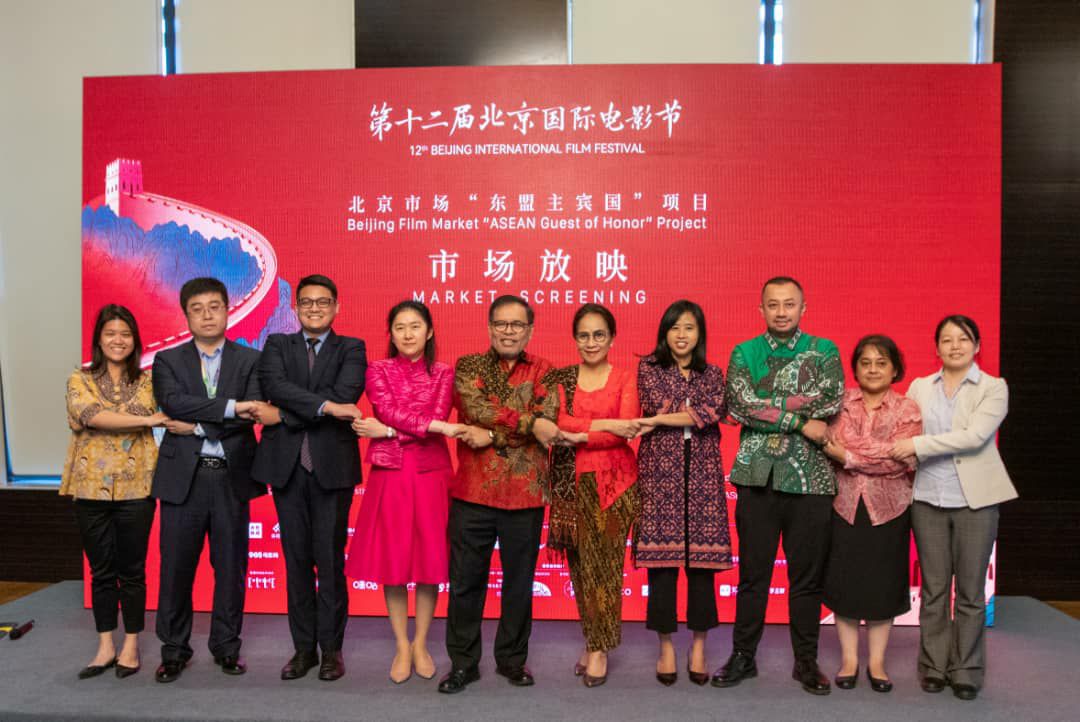
BEIJING, LELEMUKU.COM - From 16 to 18 August 2022, the “ASEAN Guest of Honour” Project of the 12th Beijing International Film Festival (BJIFF) was successfully held at Beijing Yanqi Lake International Conference Center. The ASEAN-China Centre (ACC) was invited to be the supporter of the project. On the afternoon of 16 August, Mr. Djauhari Oratmangun, Ambassador of Indonesia to China, and Mrs. Wiwik Oratmangun attended the Market Screening of Indonesian film upon invitation. Ms. Wang Hongliu, Director of the General Affairs and Coordination Division of ACC, Ms. Natthira Krasaesarn, Minister Counsellor of the Royal Thai Embassy in Beijing, and Mr. Venince Allen Carillo, Third Secretary of the Embassy of the Philippines in Beijing attended related events, including Beijing Film Market Opening Reception, Market Screening of Indonesian and Thai films.  
 
On the morning of 16 August, ACC and representatives of diplomatic envoys from ASEAN Embassies in BeijingMember States (AMS) to China also met with Ms. Xu Tao, Executive Deputy Secretary General of the Organizing Committee of the 12th BJIFF and Deputy Editor of Beijing Radio & Television Station (BRTV). They exchanged views over the ASEAN-China Comprehensive Strategic Partnership and promoting people-to-people exchanges especially in film cooperation between the two sides.  
 
ACC Supported The ASEAN Guest of Honour Project of the 12th Beijing International Film Festival

Ambassador Djauhari Oratmangun and representatives of  Embassies of ASEAN Member States (AMS) Embassies in Beijing China also accepted the interviews with journalists from China Report ASEAN, praising that the event is of great importance to tie ASEAN-China people-to-people bonds and open up film markets for both sides.
 
As a major section of BJIFF, the Beijing Film Market features several major sections, namely, Exhibition, Project Pitches, Industry Conversations, Events & Activities and Market Screening. With the support of AMS Embassies in BeijingChina, many ASEAN film agencies participated in the Online Exhibition. The Thai film, Get Him Girl!, and the Indonesian film, Longing for Light in Amestel, were screened for Chinese film industry insiders in Market Screening section. The Thai film, Fast & Feel Love, and the Indonesian film, Before, Now & Then, were screened in Market Screening as well as offline theaters, among which Fast & Feel Love was shortlisted in the Official Selection of Tiantan Award. With vivid characters and consistent plots, these four ASEAN films have been popular with audience.
 
ACC Supported The ASEAN Guest of Honour Project of the 12th Beijing International Film Festival

The 12th BJIFF was opened on 13th August, offering a variety of events including Tiantan Award, Opening Ceremony with Red Carpet, Beijing Film Panorama, Theme Forum, Masterclass, Beijing Film Market, Carnival, Closing & Awards Ceremony, the 29th Beijing College Student Film Festival,  and Film+. Following its first launch in 2021, the “ASEAN Guest of Honour” Project was also rolled out in the Beijing Film Market this year, aiming at further strengthening the ties between ASEAN and China in the cultural and creative industry and deepening friendly exchanges and practical cooperation between the two sides. (KBRIBeijing)

Labels:

Friday, August 12, 2022

ASEAN Aid Promised in May 2022 has yet to Reach Myanmar’s Refugees

ASEAN Aid Promised in May 2022 has yet to Reach Myanmar’s Refugees

NAYPYIDAY, LELEMUKU.COM - Myanmar’s junta has yet to deliver humanitarian assistance pledged three months ago by the Association of Southeast Asian Nations (ASEAN) for the country’s more than 1.2 million refugees of conflict who aid workers said are in dire need of food and medicine.

At a May 6 meeting in Cambodia’s capital Phnom Penh, the ASEAN Coordinating Center for Humanitarian Assistance (AHA) agreed to deliver aid to Myanmar under the supervision of the military regime which would distribute it to those in need.

However, aid workers in northwest Myanmar’s Sagaing region told Radio Free Asia (RFA), an online affiliate of BenarNews, that as of Monday none of the promised aid had been delivered there or other regions with refugees in need, including Chin, Kayah and Kayin states.

“ASEAN’s help hasn’t made it to Sagaing yet,” said Thet Oo, who is assisting victims of conflict with the People-to-People Program in the region’s Yinmarbin and Salingyi townships.

“It’s been three months since their meeting, but nothing has come to Yinmarbin district at all.”

Thet Oo warned ASEAN not to trust the junta’s promises.

“The junta, which is terrorizing us, will never provide the aid or assistance they agreed to with ASEAN,” he said.

The United Nations Office for the Coordination of Humanitarian Affairs announced on Aug. 3 that 866,000 people had joined the ranks of Myanmar’s refugees since the military’s Feb. 1, 2021, coup, bringing the total number to more than 1.2 million, or more than 2 percent of the country’s population of 54.4 million.

Of the new refugees, about 470,000 were forced to flee their homes in Sagaing, where clashes between junta troops and the armed opposition are among the deadliest and most frequent in the nation.

Thet Oo said his organization is struggling to provide assistance with only donations to rely on.

Meanwhile, the military is carrying out a scorched earth offensive in the region, conducting raids on villages and setting them on fire, and creating new refugees each day, he said.

In neighboring Chin state, where fierce fighting is also a daily occurrence, refugees are also facing severe shortages, aid workers told RFA.

“The need for food and medicine is still very great. There isn’t enough food in the mountains. No NGOs have yet come here,” said a spokesman for the Mindat Township Refugee Camps Management Committee speaking on condition of anonymity.

“Since the beginning, when we heard ASEAN would be providing assistance through the junta, we have been skeptical. It was clear that Chin state would not be included in the distribution program. Sure enough, no aid has reached the refugees in Mindat township to date.”

Repeated calls by RFA seeking comment from junta Deputy Information Minister Maj. Gen. Zaw Min Tun on the status of the ASEAN aid distribution went unanswered.

Agreement panned

ASEAN’s decision to deliver assistance to Myanmar’s refugees through the junta was slammed by the country’s shadow National Unity Government (NUG), as well as the Karen National Union (KNU), Karenni National Progressive Party and Chin National Front ethnic parties as “unacceptable” in a joint statement on May 30.

The groups, which the junta says are terrorist organizations, were not extended an invitation by ASEAN to the May 6 meeting in Phnom Penh at the request of the military regime, nor was the U.N. secretary general’s special representative to Myanmar, Nolin Heza.

Win Myat Aye, NUG minister for Humanitarian Affairs and Disaster Management, told RFA this week that ASEAN’s plan to provide aid through the junta will not do anything for the people who are suffering the most in Myanmar.

“What ASEAN is doing … is impractical. It hasn’t been successful because it never reached those who really need it for more than three months now,” he said.

“NUG is now already working to meet the actual needs on the ground. We are working in cooperation with international organizations, so the information we act on will be true and we can provide the necessary help. … In order to be successful, we need to help with real action, not just words.”

Win Myat Aye noted that the NUG disaster ministry had been providing shelter and medicine to refugees since the coup.

Aid workers helping refugees in Chin, Kayah and Kayin states, as well as some townships in Sagaing and Magway regions, told RFA that even if the junta is working to deliver assistance from ASEAN, it only controls Myanmar’s cities and its administration is broken in rural areas.

KNU spokesman Pado Saw Tawney said that the junta is incapable of reaching all of the country’s refugees on its own.

“There are over a million [refugees] according to available statistics. But in fact, what we believe is that there may be 2 million or more,” he said.

“This situation has become a problem that cannot be solved internally. It requires cooperation with the international community. … That’s the bottom line. Nothing will happen if it is carried out by the junta alone.”

The U.N. humanitarian affairs office said in its statement on Aug. 3 that the security and humanitarian aid situations in Myanmar have worsened significantly as fighting continues throughout the country. The agency said efforts to deliver assistance to refugees have been hamstrung by military restrictions on the transportation of essential goods, including food and medical supplies.

Call for stronger measures

Reports of the worsening refugee situation in Myanmar came as the country’s opposition groups and analysts called on ASEAN to adopt stronger measures in its dealing with the junta following the bloc’s 55th Foreign Ministers’ Meeting in Phnom Penh from July 31 to Aug. 6.

During the gathering, most ASEAN member states criticized the junta for failing to implement the bloc’s agreements and for its July 25 execution of four democracy activists, including former student leader Ko Jimmy and a former lawmaker from Myanmar’s deposed National League for Democracy party.

However, the wording of a statement issued at the end of the meeting was toned down because of an objection from the Myanmar delegation. The decision regarding Myanmar will be taken at the annual ASEAN Summit in November after studying and evaluating the extent to which the bloc’s 2021 Consensus is implemented by the junta.

Kyaw Zaw, spokesman for the NUG presidential office, said it is no longer enough for ASEAN to simply make criticisms. Instead, he said, the bloc should undertake “practical measures,” noting that there is no resolution in sight for Myanmar’s political crisis more than 18 months after the takeover.

“The 5-Point Consensus (5PC) has been disregarded and is still being ignored and it has been almost a year and a half since the coup,” he said, referring to an agreement between the junta and ASEAN to end violence in Myanmar during an emergency in April 2021.

“We’re thankful that they expressed their concern and they said they condemn the Myanmar issue. But I’d like to reiterate that now is the time to talk less and take action more.”

Kyaw Zaw said he welcomed the ASEAN foreign ministers’ decisions not to allow high-ranking representatives of the junta to attend the bloc’s ministerial-level meetings in the future, set a precise time frame for the implementation of the ASEAN Consensus and to hold formal discussions with the NUG.

Zero implementation

Under the 5PC, the junta agreed to end to violence in the country, facilitate constructive dialogue among all parties, and allow the mediation of such talks by a special ASEAN envoy. The 5PC also calls for the provision of ASEAN-coordinated humanitarian assistance and a visit to Myanmar by an ASEAN delegation to meet with all parties.

Even regime leader Senior Gen. Min Aung Hlaing acknowledged that the junta had failed to hold up its end of the bargain on the consensus in a televised speech earlier this month in which he announced that the junta was extending by six months the state of emergency it declared following last year’s coup. He blamed the coronavirus pandemic and “political instability” for the failure and said he will implement “what we can” from the 5PC this year, provided it does not “jeopardize the country’s sovereignty.”

The junta’s failure to abide by the 5PC drew criticism last week from U.S. Secretary of State Antony Blinken, who told Voice of America’s Khmer service that if the agreement is not met, ASEAN should adopt new measures, including suspending Myanmar’s membership in the bloc.

Junta spokesman Zaw Min Tun did not immediately respond to request for comment on ASEAN’s criticism.

The junta’s Ministry of Foreign Affairs said in a statement that inviting a lower-level delegate from Myanmar to the ASEAN Foreign Ministers’ Meeting and related meetings was a violation of the bloc’s charter.

Thein Tun Oo, executive director of the pro-military Thayninga Strategic Studies Institute, warned that ASEAN would become weaker if Myanmar were to be suspended.

“Currently, it’s not easy to suspend Myanmar straight away. But even if they were to make such a decision, Myanmar’s special interests would not be affected,” he said.

“We think ASEAN would become weakened and break up because of the [suspension.]”

Sai Kyi Zin Soe, a political analyst, said removing Myanmar from the bloc would only lower the pressure on the junta.

“ASEAN doesn’t have much leverage now. Expelling Myanmar would be the worst case scenario. It is within the bounds of what they can do, but I don’t think they will go that far,” he said.

“If they cut Myanmar off like that, it will be more difficult to engage ... so, it’s unlikely.”

ASEAN Special Envoy for Myanmar Prak Sokhonn is scheduled to make his third official visit to the country in September.

During his last visit in July, the envoy did not meet with any armed ethnic groups that are opposed to the junta’s coup, nor the NLD, which won Myanmar’s 2020 election in a landslide victory before being deposed in last year’s putsch.

Observers said Sokhonn’s failure to meet the opposition or other anti-junta stakeholders during his visit would only serve to legitimize military rule. (BenarNews)

Labels: